'' مدونة سمسم للمعلوماتية مدونة سمسم للمعلوماتية

اتص بنا

مرحبا بكم في مدونة سلانكي | الأفضل لكم

السبت، 9 ديسمبر 2017

تحميل كلاش رويال مهكرة برابط مباشر

نسخة مهكرة أوفلاين من لعبة كلاش رويال بأخر إصدار مع وجود البطاقات الجديدة
كلاش رويال مهكرة 2017 تحميل
تحميل كلاش رويال مهكرة برابط مباشر
fhx clash royale
برنامج تهكير كلاش رويال
download clash royale hack
تحميل لعبة كلاش رويال مهكره احدث اصدار مع البطاقات الجديده ، كلاش رويال مهكره ،تحميل كلاش رويال مهكرة ، تهكير كلاش رويال ، download clash royale hack ، كلاش رويال فكس ، fhx clash royale
clash royale مهكرة
مميزات لعبة كلاش رويال مهكره :
* جواهر ونقود لا نهائية
* كل الصناديق حتى الصندوق المجاني يقوم بإعطاءك بطاقة أسطورية عند فتحه
* تستطيع تجريب تشكيلتك الخاصة في ساحة التدريب
* شراء صناديق
* تجربة البطاقات الجديدة :D

 ملاحظات هامة جداً :
* لكي تستطيع أن تلعب ضد الروبوت عليك أن تقوم بالضغط على زر المعركة العادي فقط .
* تستطيع تنزيل اللعبة مع النسخة الأساسية بدون أي مشاكل
* لا تربط النسخة المهكرة بحسابك الجيميل أبداً أبداً !
* من الطبيعي أن لا تحمل اللعبة في بعض الأحيان بسبب الضغط على السيرفر أو ضعف الإنترنت

 مواضيع اخرى قد تهمك :
تحميل لعبة كلاش رويال مهكره احدث اصدار مع البطاقات الجديده ، كلاش رويال مهكره ،تحميل كلاش رويال مهكرة ، تهكير كلاش رويال ، download clash royale hack ، كلاش رويال فكس ، fhx clash royale
fhx clash royale
إذا اعجبك الموضوع لاتنسى مشاركته مع اصدقائك
معلومات حول كلاش رويال مهكره :
الحجم : 90 MB
النوع : العاب استراتيجيه
الترخيص : مهكره

مرحبا بك

Résumé qaisi1web

Cyber Acoustics CVL-2004 Rainier USB mic review

CVL-2004 from Cyber Acoustics is a fresh and valuable addition to the USB microphone market. Reminding a lot of Blue Yeti, it offers similar features and performance with one major difference – price. At the time of writing, CVL-2004 is considerably cheaper, and despite certain shortcomings, the value for money is just excellent. To name some of the features, this mic provides zero-latency monitoring via 3.5mm headphone socket, flexible volume and gain controls and switchable cardioid / omni polar patterns. For the price, the sound is too good and it’s balanced very nicely.

Sound & quality

From the company that used to produce nothing but low-end computer speakers, it is surprising to admit that their first USB mic actually lives up to the standards set by long-established giants. This mic may not be a technological breakthrough, but it brings some good features and a quality sound at a competitive price. The DAC of CVL-2004 has a standard sampling rate of 44.1 KHz and 16-bit depth. Most low-end mics will have a similar spec; however, this is not a reliable measure of quality. The good thing, there is no any audible jitter, which is a common attribute of any cheap-ass USB interface.
Another good thing, the mic is very quiet even at high gain. By quiet, I mean the opposite of noisy of course. So when you aren’t speaking, you may hear the background but no static or hiss. When it comes to clarity, yet again this mic does not disappoint. The tonal balance is what I love most about CVL-2004. Even though the highs lack accuracy, they are still present and in a good proportion to the mids. It is neither too dark, nor overly harsh or sibilant and, actually works great for speech recording. Blue Yeti does have better and more musical highs, yet on the other hand, CVL-2004 provides a cleaner low-end.

Features

CVL-2004-RainierThis mic probably has the best controls ever for adjusting the gain and headphone levels. The two sliders are right in front of you… so it’s very easy to access and approximate the settings. The availability of gain control can be another reason to consider CVL-2004, because so far among the reviewed mics only Yeti and Apogee have had this feature. Unlike Rode NT USB and AT2020USB Plus, there is no control to adjust the blending with pre-recorded audio; however, this can be done in control panel. You can set your mic as a playback device without any problems.
Bummer, there is no actual mute control, despite it being clearly listed among the features. In order to mute, you will have to adjust the gain slider all the way down… then probably miss the right setting on your way back up. If you are in a dark room, or in a hurry, you may even mistake one slider for another and mess it up completely as a result. Well okay. At the backside, you can switch between cardioid and omnidirectional patterns. Both capsules are of a good quality and the omni mode works flawlessly. This is a nice addition as it gives you more flexibility and particularly it is useful for conferencing.

Durability and build

At first glance, Cyber Acoustics CVL-2004 Rainier may seem to have flawless design… Die-case body with a cold ass grille is a rare find among sub $100 units. Then again, it has quality controls and no parts sticking out to break off. However, there is one major flaw – vulnerable USB port. If you look at NT USB or AT2020USB, both of them utilize a solid Type B connector. Blue Yeti uses a Mini USB, which is also fine. Now guess what do we see on CVL-2004? That’s a Micro USB connector! And considering it is located at the bottom – this is really the worst design decision they could have made.
I will try to explain what I mean as best as I can. Sometimes you just cannot avoid accidental pulls of the wire, especially for devices like mics – they really beg for it! Just kidding… in the event you pull the wire, it cannot unplug but will apply a lever force to the connector and, Micro USB connectors are very flimsy by design. There is a big chance your connector will snap, or worse damage the port and render the device useless. Fortunately, there is a workaround. You can simply tie the wire around right leg of the microphone. Then it should be safe even if it falls off a table.

Conclusion

This mic I definitely recommend for streamers and podcasters. Out of the box, it produces an expressive, good enough quality sound most people are after. Cardioid pattern does a decent job of isolating your voice and no hiss to be heard in the background. Then you get two meaningful controls for gain and volume right in front of your nose, which you can easily adjust on the fly. It could be even more appealing had they actually implemented the mute control. Still… it is quite a package for the money, and in this price range, few can match it in value. Finally, the Rainier can be a viable alternative to Blue Yeti.

مرحبا بك

Résumé qaisi1web

Panasonic Lumix DMC-FZ1000 Review

At first glance, the Panasonic Lumix DMC-FZ1000 looks a lot like Sony's Cyber-shot DSC-RX10 large 


sensor, long zoom camera, but there's a precedent within the company's own range. It's been eight years since the FZ50 was introduced, so we can't imagine too many people are still waiting, but in some respects it appears Panasonic has finally created a replacement for that much-missed model. Taken as a whole, the FZ1000 can almost be seen as a synthesis between the two cameras.
Like the RX10, the FZ1000 features a 20MP 1"-type MOS sensor (and the suspicion has to be that it's a Sony chip), but, rather than the Sony's 24-200mm equivalent zoom range, the Panasonic reaches from 25 to 400mm equivalent. To stop the whole thing becoming enormous, the FZ1000's lens is slower than the Sony's: its maximum aperture rapidly drops from F2.8 towards F4.0 as you zoom in, but there are plenty of people who'll accept that decrease in return for the additional range.
In spirit, though, the large sensor, long zoom and articulated screen can't help but recall the FZ50, which offered a similar zoom and aperture range, despite featuring a much smaller 1/1.8"-type sensor. The FZ1000 is a similarly sized camera but the eight years of technological development that underpin it mean it's able to offer significantly higher resolution in terms of its viewfinder, rear screen, pixel count and video output. Panasonic has recently been pushing the superzoom sector with the likes of its constant F2.8 DMC-FZ200, but the return to a larger sensor format and a relatively bright lens is exciting.
When the RX10 was launched, it stood alone as a costly but hugely flexible camera that seemed equally intended for stills and video shooting: the ultimate travel camera, perhaps. The launch of the FZ1000 brings both cameras into focus, making clear that camera makers believe there is a niche for cameras that do a bit of everything in a single (albeit sizable) package. The big difference between the two cameras, though, is price: the FZ1000's $899.99 / £749.99 launch price is around a third lower than the Sony's was.
Since the FZ1000's launch, Sony US has reduced the list price of the RX10 to $999 and, because it's been on the market for a while, it's available a long way below list price in Europe. This reduces but doesn't abolish the gap in price between the two cameras, and it'll be interesting to see what street price the Panasonic settles to, after a few months.
Its use of a fast readout sensor and the four-core Venus processor means the FZ1000 becomes one of the first sub-$1000 cameras to capture 4K video. Anyone wanting footage they can show immediately will have the choice of shooting 1080p movies at 60, 30 or 24 fps (50, 25 and 24 in PAL countries). The video capability is supported by the inclusion of focus peaking, zebra exposure warnings, center point marker and 'Cinema-like' gamma profiles.

Key Features:

  • 20.1 megapixel 1"-type MOS sensor
  • 25-400mm equiv. F2.8-4 Leica lens
  • 5-axis 'Power OIS' stabilization
  • XGA OLED electronic viewfinder with 2.36M dots
  • 3-inch fully-articulated LCD with 920K dots
  • 4K (3840x2160) video at 30p, 100Mbps MP4
  • 1080p at up to 60p, 28Mbps (MP4 or AVCHD)
  • 120fps quarter-speed 1080p
  • 3.5mm microphone socket
  • Clean HDMI output
  • Zebra pattern and focus peaking
  • Wi-Fi with NFC
  • 360 shots per charge (CIPA standard)
It's not only the Venus processor that the FZ1000 shares with the GH4, it also features many of its customizable control points. These aren't quite so numerous as on its interchangeable lens cousin, due to the lack of touchscreen, but they're still pretty welcome on a 'compact' camera. The FZ1000 also offers the kind of hard-point controls, such as an AF drive mode switch and AEL button, that rarely make an appearance below the enthusiast interchangeable lens camera level.
The FZ1000 also gains the GH4's 'DFD focusing' - a means of determining roughly how far it needs to refocus, based on an understanding of the characteristics of the lens in out-of-focus regions. This aims to play the same basic role of on-sensor phase detection: a way of assessing the distance the camera needs to focus on, so that it can rush the lens to near that point before using contrast-detection to establish perfect focus.
The camera also features an in-camera Raw conversion option, which is a very welcome addition, letting you tweak a range of image parameters after you've taken a shot, applying different noise reduction and Photo Styles or making adjustments to brightness or the highlight and shadow response.

Panasonic Lumix DMC-FZ1000 Comparison

The FZ1000's only real competitor is Sony's RX10, which also tries to offer a flexible zoom range plus high quality stills and video in a single package. We're also including the current breadwinner in Panasonic's superzoom lineup, the DMC-FZ200.
 
Panasonic DMC-FZ1000
Sony DSC-RX10
Panasonic DMC-FZ200
Sensor
20.1MP MOS
20.2MP BSI-CMOS
12.1MP MOS
Sensor Size (mm2)
116
116
28
Equivalent zoom range
25-400mm
24-200mm
25-600mm
Aperture range
F2.8-4.0
F2.8
F2.8
Equivalent aperture range
F7.6-10.8
F7.6
F15.5
Video recording formats
AVCHD, MP4
AVCHD, MP4
AVCHD, MP4
Maximum video resolution
3840x2160
1920x1080
1920x1080
Highest bitrate (for 1080p footage)
28Mbps (1080p60)
28Mbps (1080p60)
28Mbps (1080p60)
Battery life (Shots-per-charge, CIPA)
360
420
540
Built-in ND filter?
No
Yes
No
Dimensions (WxHxD)
137 x 99 x 131mm
129 x 89 x 120mm
125 x 87 x 107mm
Weight
831g
813g
588g

The lens

What does this mean in the real world, though? Have a look at the equivalent aperture comparison chart below:
Just like 'equivalent focal length,' equivalent apertures allow you to compare lens behavior side-by-side across cameras with different sensor sizes, by taking sensor size into account. The equivalent aperture figure gives a clear idea of how two lenses compare in terms of depth-of-field. It also gives an idea of low-light performance, since it also describes how much light is available across the sensor's area. However, differences in sensor performance mean this can only be used as a guide, rather than an absolute measure.
The FZ1000's maximum aperture drops off very quickly, as soon as you start to zoom, and by around 150mm equivalent, it's a whole stop slower than the Sony RX10. However, this still leaves it half a stop faster than the likes of the Olympus Stylus 1. On top of this, the FZ1000's lens then continues on to a very impressive 400mm equivalent focal length.
The only other way of achieving this level of reach with an effectively brighter aperture would be an APS-C DSLR with a superzoom like the Sigma 18-250mm f/3.5-6.3 DC Macro OS HSM or Tamron 16-300mm F/3.5-6.3 Di II VC PZD Macro (most closely represented by the Nikon 18-200mm shown here) - a combination that will be considerably larger, though can be had for similar amounts of money.

مرحبا بك

Résumé qaisi1web

الأحد، 6 أغسطس 2017

GoPro Hero 5 Black Review – 4K UHD Action Camera

GoPro Hero 5 Black Review – 4K UHD Action Camera

by on February 26, 2017
DETAILS
 
BRAND
OVERVIEW
GoPro’s 4K and HD action cameras are some of the best known devices of their kind on sale today and with good reason. Whatever financial problems the company behind them may be having with its stock prices and profit margins, it never stopped making some damn fine camera technology as far as we’ve ever seen. The GoPro Hero 5 Black is in no way an exception to this tendency. In fact, we’d argue that this particular tiny camera has taken all the very best aspects of its predecessors, improved them still further and crammed them into one awesomely tough little package that’s superb for fans of action ultra HD video even under the most rugged conditions.
Coming with a completely redesigned and much tougher exterior, the Hero 5 Black features every good thing you probably want or recognize in a GoPro action camera while also departing in some very crucial ways from the design of its predecessor the Hero 4 Black from 2015. Some of these changes are good and others not quite so much, as we’ll shortly see.
THE GOOD
Let’s start with the Hero 5 Black’s design. Like its predecessors, this camera sticks to the same basic boxy form we’ve become used to. However, with the Hero 5 Black, the boxy shape is a bit more rounded off along the edges and definitely a bit more robust thanks to a rubberized outer skin over certain key parts of its form. This obviously means that the camera is going to handle bumps, bangs and being dropped a bit better while at the same time also being easier to hold firmly so that you actually don’t even drop it and bang it against random objects in doing so. The dual protection against accidents with the not-so-cheap Hero 5 Black that these design aspects offer is quite useful indeed.
Another part of the Hero 5 Black’s redesign that we do love is a newly included in-camera waterproofing that’s worth its name. Unlike its predecessors, or many other 4K action camerasthis little action shooter comes ready right out of the box for immersion in up to 10 meters (about 35 feet) of water. This of course isn’t quite as good as the 30 meter immersion that the Hero 4’s external case allowed (it doesn’t fit on the Hero 5’s body either, but more on that below) but one major benefit of the Hero 5’s waterproof body is that you can take underwater video with audio quality that doesn’t sound utter crap recorded from inside a bucket. The waterproofing features of the Hero 5 Black include reinforced watertight covers for its ports and while these do make the camera’s ports, battery, MicroUSB slot and so forth harder to access on the go, the camera safety factor they impart when you’re swimming in a coral reef or slogging through mud and heavy rain does offer some piece of mind.
Moving on to other favorable aspects of the Hero 5 Black’s redesign, we come to the camera’s touchscreen. This is one area where the new camera departs heavily from what its predecessors offered in that some of the old and rather clumsy physical button controls of the Hero 4 and others have been replaced by menu navigation and shooting control via touch. Thus, you can use the touchscreen much like you’d use a smartphone display to handle camera menu items, turn features on or off and bring up your gallery of previously recorded photos and videos. Other settings like video stabilization, resolution control, photo format switching and so forth can also be handled by touch quickly and much more easily on the move. On the other hand, for those who still want them, the physical shutter and mode buttons are still built into the Hero 5 black like they were in the Hero 4 camera. The Hero 5 Black’s 2 inch touchscreen isn’t big, given the compact size of this camera but it’s good enough for using the new Hero rapidly and easily.
One other aspect of the new touchscreen design that we love in the Hero 5 Black is how it lets you capture and frame photos or video without having to rely on an external smartphone app. This means a much easier and smoother shooting experience while also letting you compose better shots in conditions where you really wouldn’t want to be carrying your fragile, not-so-waterproof phone along with you. The Hero 5 also offers physical control for pretty much all of its newfangled touchscreen features so if you’re not feeling so agile with the tiny 2 inch LCD display, using this shooter remains the same as using the Hero 4 if you want it that way. Then, for the more adventurous, the Hero 5 also comes with voice controls. These are a bit limited but it’s nice to be able to have the camera turn on, start recording a video and so on just by talking to the device.
Finally, while we’re going to cover it in further detail down below, we have to mention the single most important aspect of the Hero 5’s benefits. This is of course its ability to shoot photos and video. This little camera naturally enough excels at both things to about the same degree of quality that the Hero 4 Black did but in this case you get a couple of neat new twists. Thus, the new Hero camera comes with the same ½.3 CMOS sensor and 4K video recording at 30fps.several other video resolutions like 2.7K, 1,440p, 1,080p, 960p, 720p and 480p are all available in their own distinct frame rates with a max frame rate of 240fps for some very high quality slow-motion video. Photo stills can also be taken in the same 12 megapixel image size that was the case with the Hero 4.
The real tweak to the GoPro Hero 5’s video recording abilities however is this camera’s new electronic image stabilization technology. This is a feature that sets the Hero 5 Black apart from all of its predecessors and it allows you to stabilize video recordings as they get processed by the camera’s sensor. The resulting footage is reasonably smoothed out and if you combine the EIS with a gimbal for physical image stabilization, the Hero 5 undoubtedly delivers some of the most stable video we’ve yet seen from a GoPro shooter.
Finally, we’d also like to mention that the Hero 5 Black camera offers a superior level of battery performance to its predecessor and that its CMOS sensor seems to handle low light video and photo shooting better than did the sensor in the Hero 4 Black. Both of these are what we’d call very welcome improvements for outdoor recording of almost any type.
Check the Price of the GoPro HERO5 Black on Amazon:

4.4 - 427 Reviews
THE BAD
On the other hand, the Hero 5 Black does have a couple of fairly minor defects that are worth mentioning. None of these are what we’d call deal breakers but they can get annoying.
For starters, the same physical redesigns that make the GoPro Hero 5 Black such a tough and coolly different looking little camera also might seriously piss off some owners of numerous older accessories for previous Hero camera designs. The main example of this is the redesigned body. Any effort to cram this new model into the waterproofing cases of previous Hero models apparently doesn’t work regardless of how hard we try and while the Hero 5 is waterproof without a case, some Hero 4 accessories would have been nice to use with this latest GoPro model.
Another less than ideal aspect pf the Hero 5's design has to do with the touchscreen itself. Yes we like it and we definitely appreciate the way in which it simplifies and speeds up using the camera in the field with its intuitive navigation menus but after a bit of use we started to notice a bit of a delay in how it responds to touch commands. This happens particularly with switching across special settings, changing shooting modes and with photo shooting. The touchscreen controls always work, they don’t simply freeze or fail to respond but that tiny delay creates an overall feeling of sluggishness that gets irritating.
In any case, if you don’t like the touchscreen or your fingers feel a bit too big to use it with agility, the physical buttons on the Hero 5 are still there to let you do almost anything the screen allows.
Finally, coming down to the quality of video and photos captured in the Hero 5, both are slightly better than those of last year’s Hero 4 due to this camera’s superior low light shooting capacity but the GoPro Hero 5 suffers from the same basic issue of slightly muted color saturation that we’ve noted in other Hero cameras from time to time. Noise in low lighting is also still there in this camera, though it’s definitely lower than what you’d get in the Hero 4 when the camera is being used in a poorly lit place.
FINAL THOUGHTS
The GoPro Hero is a wonderful piece of photo and 4K video recording technology. Overall, this shooter is not only superbly built and robust, it’s also tough, flexible and offers an even better experience than what we got with the Hero 4 Black. It’s flaws are completely minor sorts of things and the benefits of using a Hero 5 completely outweigh them. Specifically, we can’t name a definitively better outdoor action camera at this time.
SPECS
• App control: Android, iOS
• Sensor: 1/2.3in CMOS
• Sensor pixels: 12,000,000
• LCD screen size: 2in
• Video recording format: MP4
• Video recording resolutions: 4K (24/30fps), 2.7K (24/30/48/60fps), 2.7K 4:3 (30fps), 1440p (24/30/48/60/80fps), 1080p (24/30/48/60/80/90/120fps), 960p (60/120fps) 720p (30/60/100/120/240fps), 480 (240fps)
• Max recording resolution: 4K (30fps)
• Time lapse mode intervals: 0.5, 1, 2, 5, 10, 30, 60s
• Video recording media: microSD
• Audio: 48KHz stereo
• Maximum still image resolution: 4,000 x 3,000
• Memory slot: microSD (not included)
• Data connections: USB Type-C, Micro HDMI input
• Battery type: Li-ion
• Battery life: 1h 45m
• Dimensions (HxWxD): 44.5x62x32mm
• Weight: 117g
ACCESSORIES
The GoPro Hero 5 comes with a number of basic accessories right in the box. These include the camera’s frame, a single rechargeable battery, a curved adhesive mount, a flat adhesive mount, a mounting buckle for completing the camera’s mounting accessories for all sorts of devices and surfaces and a single USB cable.
Of course we’d also recommend getting yourself an extra battery unit, a head strap for shooting while walking and if possible, getting a shooting pole, gimbal of some kind and if you really feel like splurging, buying a couple of other important mounting devices such as the GoPro suction cup and a GoPro large tube mount. Two further obligatory accessories that don’t come included are the microSD memory card you’ll need to store photos or video and an HDMI cable for quicker transfer of videos (especially 2K and 4K videos). A good example of this last would be something like a SanDisk 64GB Extreme PLUS UHS-I microSDXC Memory Card.
Check the Price of the GoPro HERO5 Black on Amazon:

4.4 - 427 Reviews
OVERALL PERFORMANCE
The overall performance of the GoPro Hero Black is not exactly perfect but it’s definitely better than that of its predecessors. Basically, you’ll get all of the best aspects of all the other GoPro Hero cameras on the market stuffed into a single rugged piece of outdoor recording technology and as a result this camera deliver the best overall level of recording and action endurance quality possible right now from anything by GoPro or for that matter just about any other action camera brand available at this time at this price. The Hero 5 is an excellent piece of performance technology for users who are serious about outdoor action recording and don’t want a camera that’s likely to fail at a crucial moment. We do think that the Hero 5 could have been given some slightly better battery life, since it can record for a maximum of only 1.45 hours when used in its non-UHD resolutions but buying an extra battery unit will fix this problem quite nicely.
IMAGE QUALITY AND RESOLUTION
Overall, the video and photo quality of the Hero 5 is great. The 4K recordings look superb and wonderfully sharp with very little image shake and the level of fish-eye in this particular camera is fairly low by action camera standards thanks to the new linear field of view feature that GoPro built into this Hero 5 version. We’d even say that at fish-eye reduction, the Hero 5 Black performs better than its predecessors. Color saturation in video recordings is definitely on the muted side but the overall effect isn’t anything that will spoil your day, especially not if you have access to some decent editing software. Furthermore, the color mute is more of a problem if you’re recording in lower light and under cloudy conditions. For recording in a brightly lit space or on a sunny day, the camera delivers very little color weakness and much less any noise. One thing we would have loved to see is 4K resolution finally available in a Hero camera at 50fps or more. This was something that had been rumored for the Hero 5 Black but as it turned out, this shooter sticks to the same 24/30fps shooting speeds of its older cousin the Hero 4 Black.
We should note that if the EIS (electronic image stabilization) is activated at any resolution for which it’s available, it will crop out about 10% of the video specs as part of its functionality. So if you’re able to use a gimbal to keep the camera stable while shooting, it’s probably better to use the EIS as little as possible if you want full pixel shots. On the other hand, the Hero’s EIS does actually work pretty well, so if you don’t happen to have a gimbal for manual image stabilization, leaving it on constantly is worth the 10% loss of video pixels. We should however note that EIS doesn’t work at 4K resolution.
Moving onto photo quality, the Hero 5 Black does a great job of delivering clear, crisp and brightly illuminated still images. Colors are also fairly vibrant and the level of color saturation for still shots is notably better than it is during video recording. Low light still photos generally also look very good though we have noticed a bit of fuzziness in slightly darker scenes, especially in shadowy spots in a photo composition. Furthermore, because the GoPro Hero 5 Black comes with the RAW photo recording that a lot of users would have probably loved to see in earlier GoPro models, editing of photos is much easier at a more professional level.
PRICING
GoPro’s Hero 5 Black action camera is selling right now at a fairly reasonable price of $399.99 for the body-only package with the essential extras we mentioned above in our “accessories” section on Amazon.com. Then there’s also an “Adventure Bundle” available for $3. This little package includes a Head Strap Camera Mount for GoPro and a SanDisk Extreme 32GB SDHC UHS-I/U3 Memory Card.
Check the Price of the GoPro HERO5 Black on Amazon:

4.4 - 427 Reviews


مرحبا بك

Résumé qaisi1web

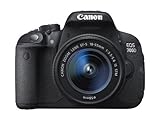
Canon EOS 700D review

Canon EOS 700D

Canon EOS 700D review: A great camera, but surpassed by the 750D


Canon EOS 700D
Our Rating 
Price when reviewed 
539
inc VAT

Page 1 of 3Canon EOS 700D review: A great camera, but surpassed by the 750D


A superb all-rounder with a consistency that makes it more than the sum of its parts

Specifications

The Canon 700D is one of the greatest mid-range cameras of all time. However, cameras like the 700D aren't novels or albums and so, it must eventually stand aside for something better still. In this case that'll be the Canon 750D and 760D, the two cameras are technically identical, but the 760D caters for enthusiasts (with a top-mounted information LCD and extra mode dial) while the more basic 750D has less controls and is aimed at novices who still want good image quality.
Since our original review, the 700D has slightly dropped in price. You can find the 18-55mm lens kit and body for just under £500. Of course with the 750D and 760D cameras already out, you'll see some cheaper prices on the 700D, so is it worth considering this older model?
Canon EOS 700D
The 700D has become the mainstay of Canon's range but not for much longer
Ricoh's Theta: 360-degree camera review

Canon EOS 700D review: Design and features

Canon undoubtedly makes some fantastic SLRs, but for its three-digit consumer models, we've found in the past that this reputation is somewhat unwarranted. Perhaps this is because rivals have had to try that little bit harder to compete. The Nikon D5200 has a 39-point autofocus sensor, compared to the 700D's nine points. The Pentax K-30 has a significantly larger viewfinder and dual command dials – features that are only available in pricier EOS models.
The old 600D and its predecessors also suffered from various niggling problems. Autofocus was painfully slow in live view mode, and even worse when recording videos. We also found that the main autofocus sensor (when shooting with the viewfinder) often struggled to get pixel-sharp results from with the 18-55mm kit lens. This left users with the unfortunate choice of fast or reliable focusing – not the sort of decision we'd want to make after spending over £500 on a camera.
Canon EOS 700D
The 700D was amongst the subtlest updates in the product line in its eight year history. Compared to the old Canon 650D, there's a new EF-mount kit lens, a couple of subtle cosmetic changes (not counting the product name badge) and the ability to preview creative filters when composing shots in live view mode.
It may be a subtle update, but it's worth paying the extra for the new kit lens – and also the phase-detect autofocus points that are integrated onto the main imaging sensor, which were introduced in the 650D. The new lens has the same optical specifications as the old one, but its STM suffix (short for stepping motor) indicates that it's designed for smooth operation when recording videos. Most SLR lenses are designed to jump quickly to the required focus. This one can do this when focusing for photos, but in video mode it glides smoothly and silently while recording. The touchscreen – another feature that was introduced for the 650D – plays a valuable role here too, allowing a touch-for-spot-focus function, complete with subject tracking.
Canon EOS 700D
The new lens performs a little better than the old one in live view mode, too. It typically took about a second from pressing the shutter button to taking a photo, and a total of 4.2 seconds from one shot to the next. These aren't great results by any means, but it did allow us to take a few snaps with the camera at waist level without having to get on our knees to look through the viewfinder. It's a little faster than the 650D, and a massive improvement over the 600D.
700D vs 600D live view autofocus test
Best of all, we're delighted to report that we didn't experience any focus accuracy issues with the new lens when shooting with the viewfinder. With the old kit lens, when we took two shots, one with the viewfinder, another in live view mode, the second one was often slightly sharper. This time, there was no consistent difference between the two.
Otherwise, the 700D is essentially the same camera as the 650D, and by and large that's a good thing. The controls are well laid out, with a generous quota of labelled, single-function buttons. Pressing the Q button turns the LCD screen into a touchscreen control panel, giving quick access to a wider range of functions. The touchscreen speeds up main menu navigation, too, although the normal controls still work for those who prefer buttons. The 3in screen is pin sharp, and its articulated design is a great asset for video and live view shooting; you can flip it out for self-shooting or for reference when filming, or angle it upwards or downwards when shooting subjects at angles that would be awkward for fixed screen digital SLRs. It's very bright, too, meaning you can easily see your subject when shooting outdoors on a bright day.
Canon EOS 700D
A good range of controls and an articulated screen
HDR bracketing makes a return from the 650D, and Canon's free Digital Photo Professional software provides a simple way for amateur photographers to try their hand at high dynamic range images, but it's still limited to three exposures; there's no way to opt 

مرحبا بك

Résumé qaisi1web
سلانكي

جميع الحقوق محفوظة | سلانكي مدونة سمسم للمعلوماتية أعلن معنا رخصة الإستخدام والنشر خريطة الموقع سياسة الخصوصية تصميم : اسلانكي | الأفضل لكم